Kids in Birmingham 1963

Working Together for Change

Gail Short

Ann Jimerson remembers her amazement back in 2001 when she was walking through the Birmingham Civil Rights Institute and came upon a timeline display listing the major events of the civil rights movement. Because she had lived in Birmingham as a child from 1961 to 1964, the year 1963 immediately caught her attention.

Among the events that year was Rev. Martin Luther King, Jr.’s arrival in Birmingham to lead a campaign to protest the city’s segregation laws—and his arrest on April 12; he wrote his famous “Letter from the Birmingham Jail” on April 16.

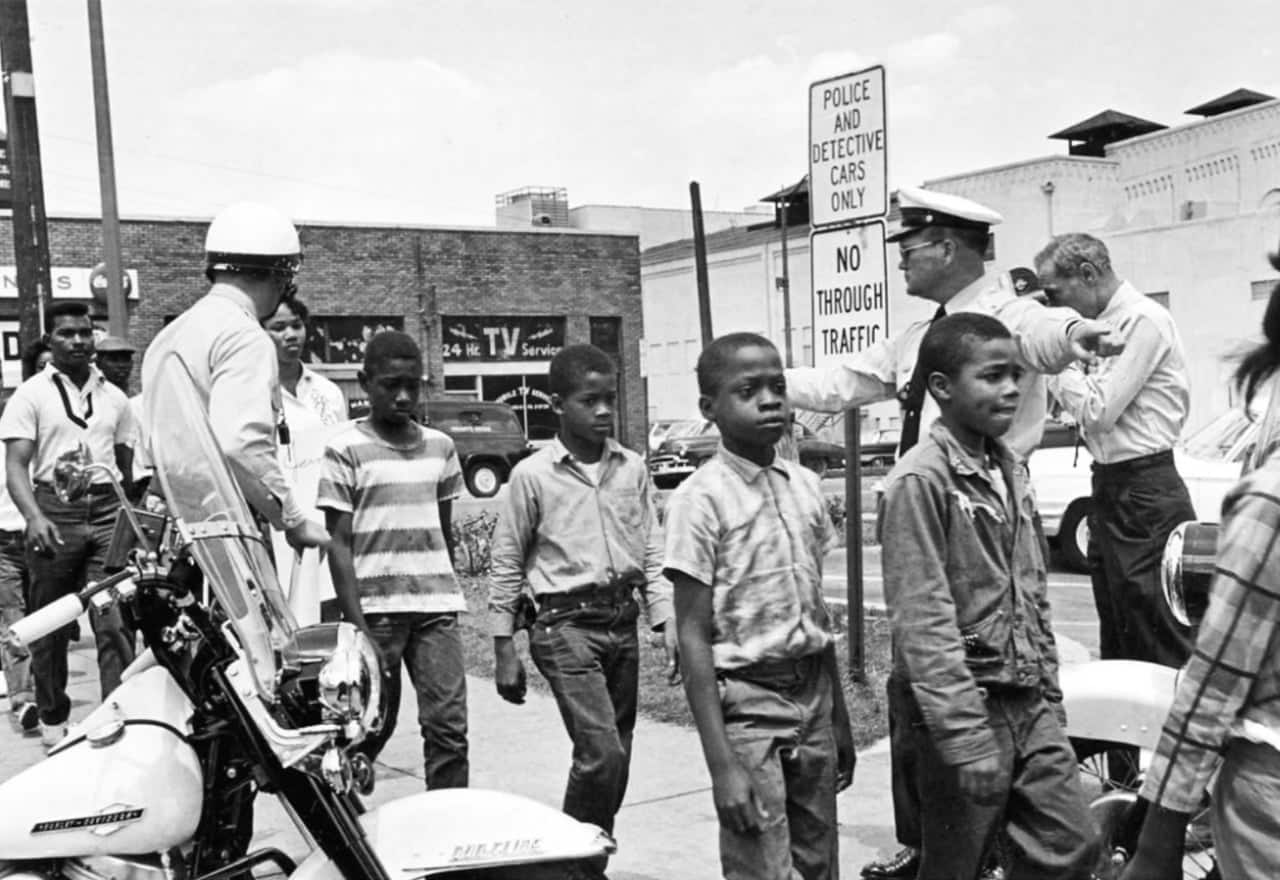
In early May, during what came to be known as the Children’s Crusade, police used police dogs and high-pressured fire hoses to attack Black youths demonstrating peacefully against segregation.

On August 28, King delivered his famous “I Have a Dream” speech during the March on Washington D.C.

The Birmingham Children’s Campaign was part of the transformational year now referred to as “The Year of Birmingham, 1963.” Later that year, terrorists bombed the Sixteenth Street Baptist Church, killing four young girls. The year’s events pushed the Federal government to pass the Civil Rights Act of 1964.

Then, on September 15, white supremacists bombed the Sixteenth Street Baptist Church, killing four young Black girls and injuring others.

Fast forward to 2013, when festivities in the city celebrating the 50th anniversary of the Birmingham Campaign were taking place. That year, Jimerson says memories of the timeline at the Birmingham Civil Rights Institute inspired her to find a way to collect stories from 1963.

So in March 2013, Jimerson, who had spent years working in public health communication, launched Kids in Birmingham 1963 (KIDS), a website where people of all races can share personal stories of growing up in Birmingham as the civil rights movement exploded around them.

To start the site, Jimerson reached out to family, friends, the archivist at the Birmingham Civil Rights Institute, members of the media and others, asking anyone who was a child in Birmingham in 1963 to contribute stories. Soon, word of the website spread. “Then things just kind of went like wildfire that year because so many people were thinking about traveling back home for the anniversary commemoration,” she says.

I remember standing in front of the timeline on one of the walls there…I said, ‘1963. Can you believe all of that happened in 1963?’

Contributors to the site have come from all walks of life. Some participated in the movement. Others witnessed it. They include writers and editors such as Diane McWhorter, Howell Raines, Harold Jackson, and Carol Nunnelley, as well as educators, attorneys, business leaders, and many others.

“We ended up with 50 people by the end of that first year and now we’re closer to 80 people who have told their stories,” Jimerson says. “Some stumbled upon us, but that’s really rare. It usually takes a little bit of coaxing to get people to want to post a story.”

“We all grew up in the same area, sometimes within a few miles of each other,” says Jimerson, “but we couldn’t have known each other because of segregation. Today we’re in our 60s, 70s, and 80s, and we have found each other.”

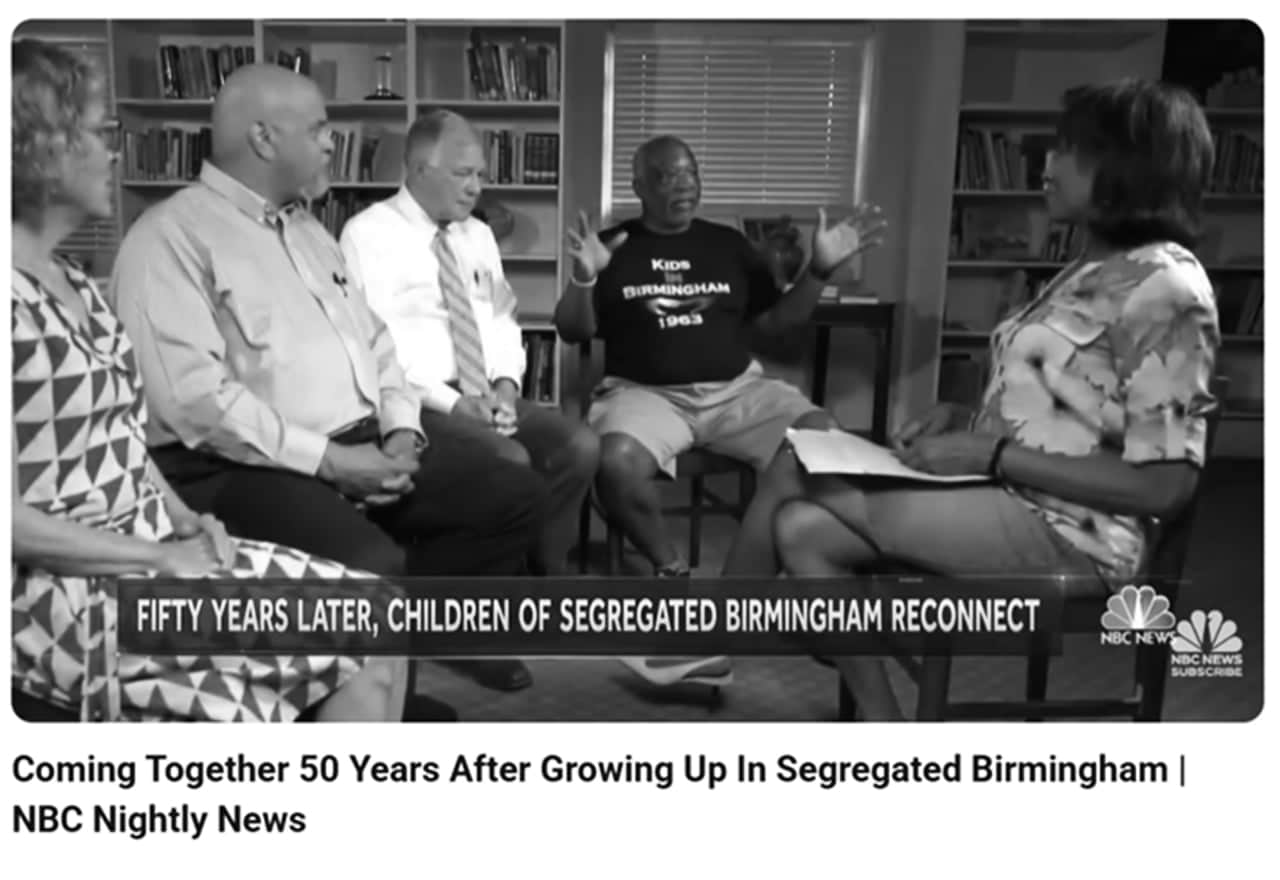
“The children who grew up in segregated Birmingham, Alabama returned home to tell their stories together, making connections that were strictly forbidden when they were growing up.” NBC correspondent Rehema Ellis says of the Kids Storytellers’ visits to local schools, “A powerful example for students—and the rest of the country.” Kids Storytellers Katherine Ramage, Jeff Drew, Chervis Isom, and Dale Long with NBC’s Rehema Ellis. November 2018.

New Ideas and Initiatives

“Our growth has been very organic,” Jimerson says. “We started out with just the idea of giving people a place to record and share their stories, but we’ve extended our outreach to a wider audience in recent years. For example, we’ve collaborated with nonprofits and K-12 teachers to develop activities and events to publicize the stories of 1963. Our goal with this project, like all of our efforts, is to give the public a deeper understanding of the complexities, impacts, and unintended consequences of racism and discrimination on minorities, as well as on whites and on society as a whole.”

In September 2018, KIDS storytellers convened in Birmingham, many traveling from across the country to talk across the color line that divided them in 1963. The meeting prompted them to form a 501(c)(3) nonprofit organization to focus on education and reconciliation in the Birmingham area. Photo by Virginia Jones.

Jimerson says KIDS’ evolution started back in September 2018, when she and the other storytellers met up in Birmingham to attend a memorial in remembrance of the September 15, 1963, bombing of the Sixteenth Street Baptist Church that killed four Black girls.

While in Birmingham, Jimerson and the other storytellers began talking about the organization’s future. “We wanted to get to know one another in ways that we couldn’t have during Jim Crow and, in addition, we wanted to give back to Birmingham,” she says.

So they turned KIDS into a nonprofit and decided on four initiatives with the goal of promoting reconciliation and education, she says.

We ended up with 50 people by the end of that first year and now we’re closer to 80 people who have told their stories.

Sharing Stories with the World

The first initiative, “Sharing Our Stories,” involves a plan for the storytellers to share their stories not only in text on the KIDS website, but also via video and audio interviews, with the help of filmmakers from organizations such as the Bending the Arc Project.

Jimerson says she also took the advice of a reporter at the public radio station in Birmingham, WBHM-FM, who told her that to reach larger audiences through mass media, reporters would need to speak with the KIDS storytellers in live, in-person interviews.

As a result, journalists have featured KIDS storytellers in outlets such as The Washington Post podcast, NBC Nightly News, NPR, German Public Radio, and al.com. Other print and television journalists around the country have interviewed storytellers for feature stories and for background for articles and documentaries.

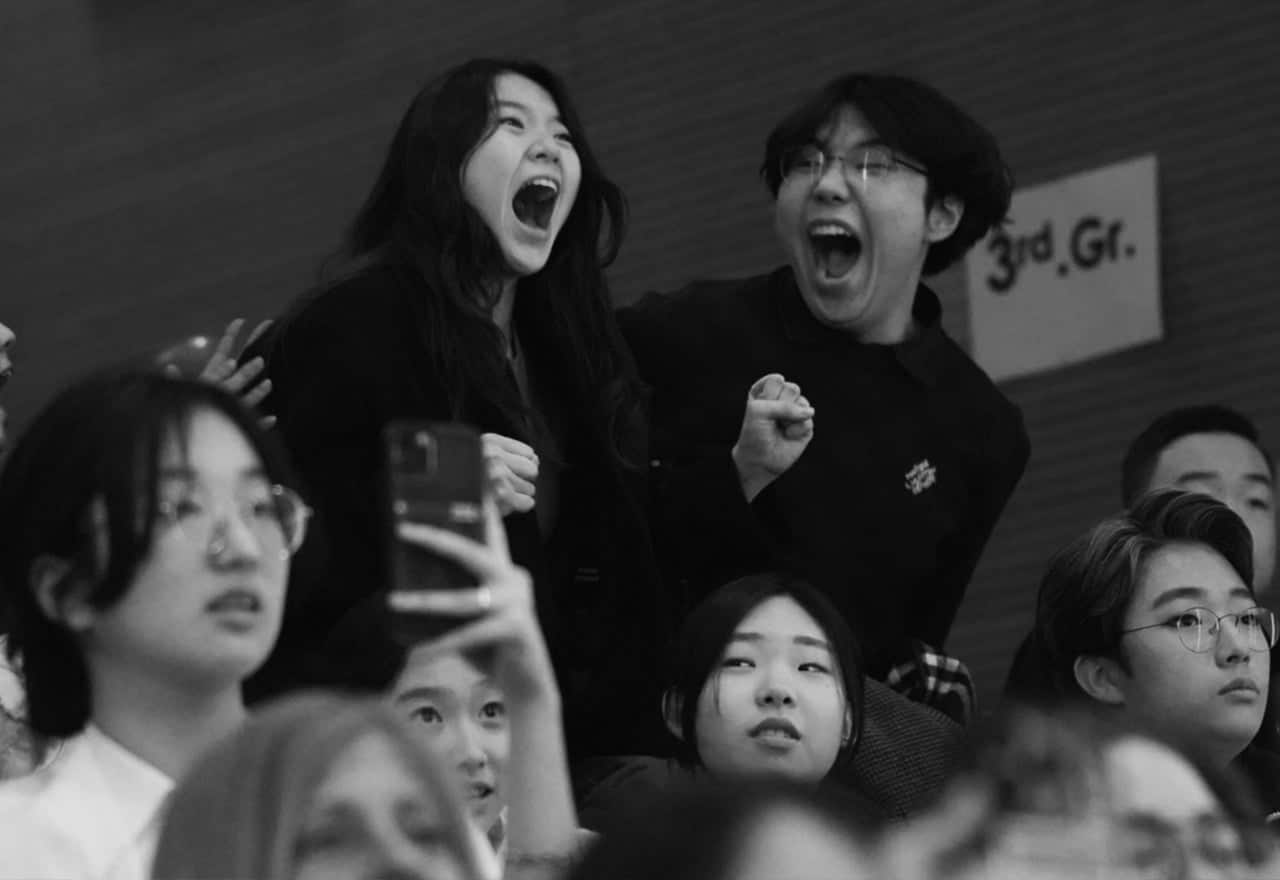
South Korean students Liwen Wang and Oliver Park react to news that they won first place for their National History Day project, a website they created on the Birmingham Children’s Crusade. They credit interviews with KIDS storytellers for helping them clinch first place. Photo by Esther Choi.

Moreover, six authors, including Sharon Robinson, daughter of baseball legend Jackie Robinson, have turned to KIDS for background for their books. (Robinson is the author of Child of the Dream: A Memoir of 1963.)

“Hundreds more have accessed our online stories to inform and support diverse communication projects and educational programs,” Jimerson says.

In addition, more storytellers began delivering lectures, participating in panel discussions, and visiting K-12 schools—in person and virtually—to share with teachers and students their memories of the civil rights movement. Storytellers have also hosted tour groups for visitors to Birmingham and have offered interviews to students preparing projects for National History Day competitions.

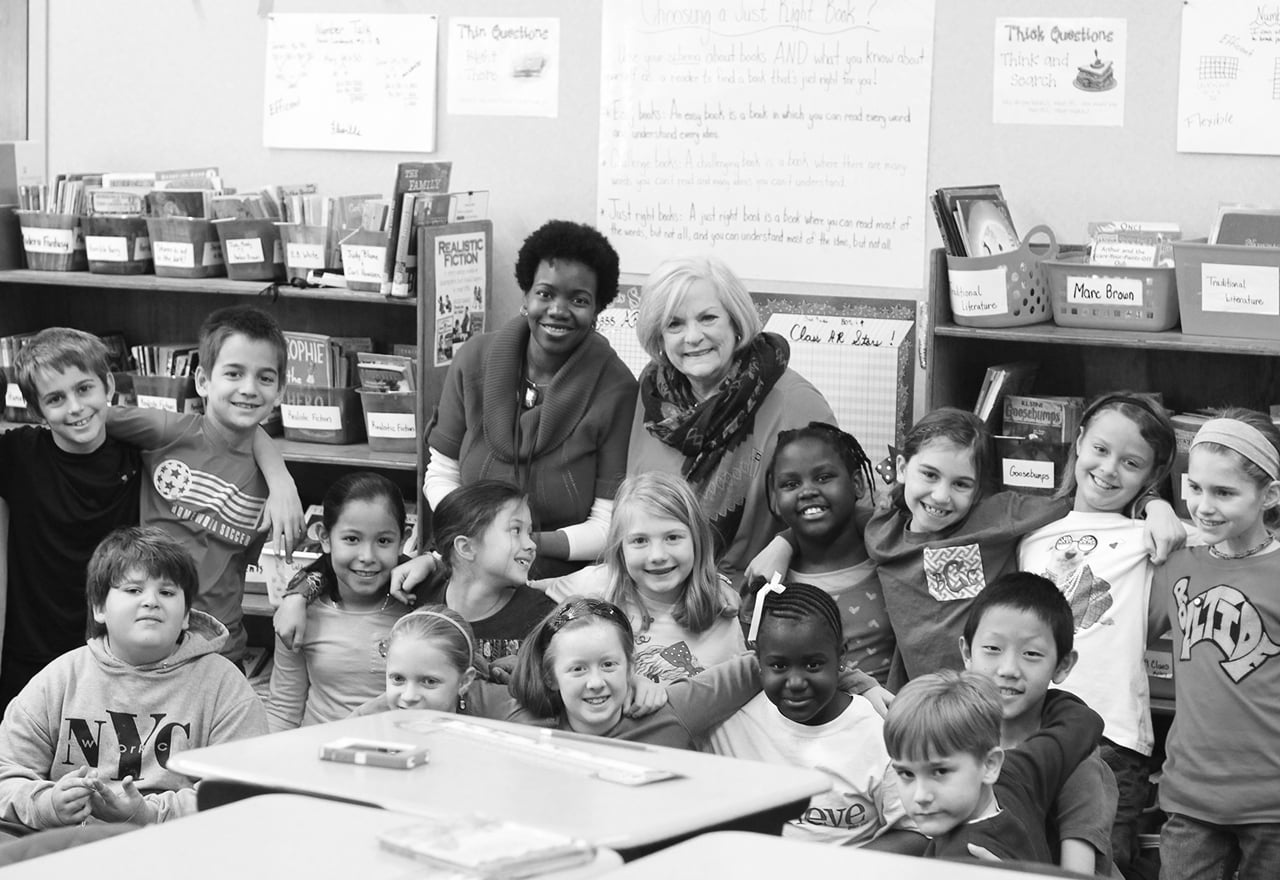
KIDS storyteller Virginia Jones visited an elementary classroom in the suburban school that she had attended in the 1950s, answering students’ questions about what it was like to attend a whites-only school in the Jim Crow years.

Most recently, two students from South Korea interviewed Freeman Hrabowski, a storyteller and former president of the University of Maryland Baltimore County, as well as Birmingham novelist T. K. Thorne and former Birmingham Police Chief Annetta Nunn. The trio talked with the students about the Children’s Crusade, when hundreds of Black school children in Birmingham marched in protest of segregation.

“It’s really gratifying to have students today pay attention to the messages from our generation, in part because I think it brings home for them the difference that young people can make. I think it helps them see the power that young people can have in making big social changes,” Jimerson says.

Building Bridges with Dialogue

The second KIDS initiative is “Dialogue Builds Bridges.”

Through this initiative, the group launched KIDS Connect, where the storytellers meet over Zoom every third Thursday night of the month for discussions, to build friendships, and usually to hear a speaker. Speakers for the meetings have included luminaries such as Harold Jackson, the retired editorial page editor for the Philadelphia Inquirer and a Pulitzer Prize-winning columnist for The Birmingham News; investigative journalist Jerry Mitchell, on his book Race Against Time: A Reporter Reopens the Unsolved Murder Cases of the Civil Rights Era; and Lisa Daniels, a spokesperson for the United Negro College Fund. One meeting featured four individuals who were the first Blacks to integrate John Carroll High School in Birmingham in 1964.

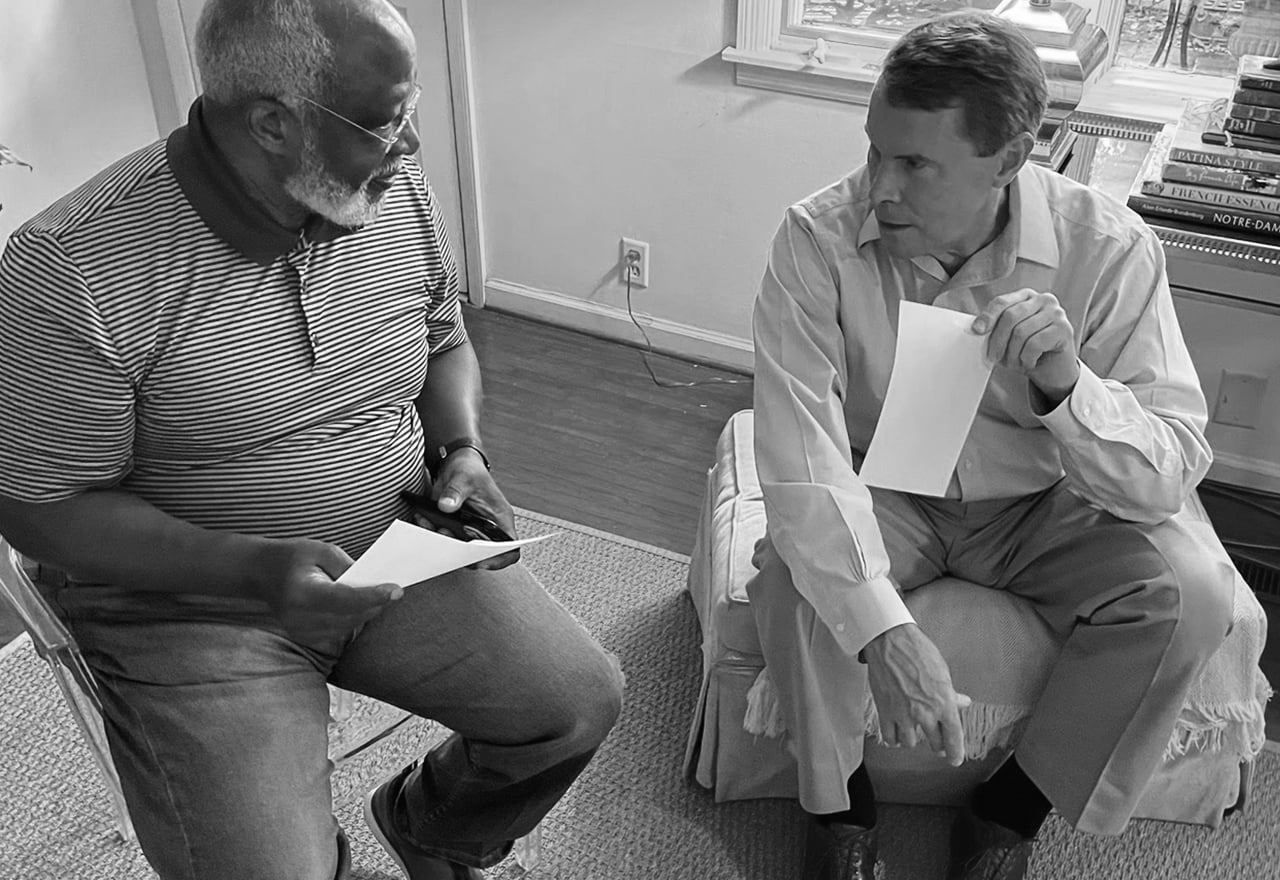
Dale Long and Robert Posey found themselves in deep conversation as they answered questions posed on the conversation starter cards, part of the Voices of Truth Campaign.

Jimerson says KIDS Connect exposes the storytellers to new ideas and to people and organizations that help the group think about the best ways to contribute to improvements in Birmingham.

Two nonprofit organizations that have teamed with KIDS are the Jefferson County Memorial Project (JCMP), which partners with communities to honor the victims of lynching; and FHI 360, which connects research projects with resources to bring about better health outcomes and other solutions around the world.  Jimerson says these three organizations developed the Voices of Truth campaign to promote greater dialogue and reconciliation between the races.

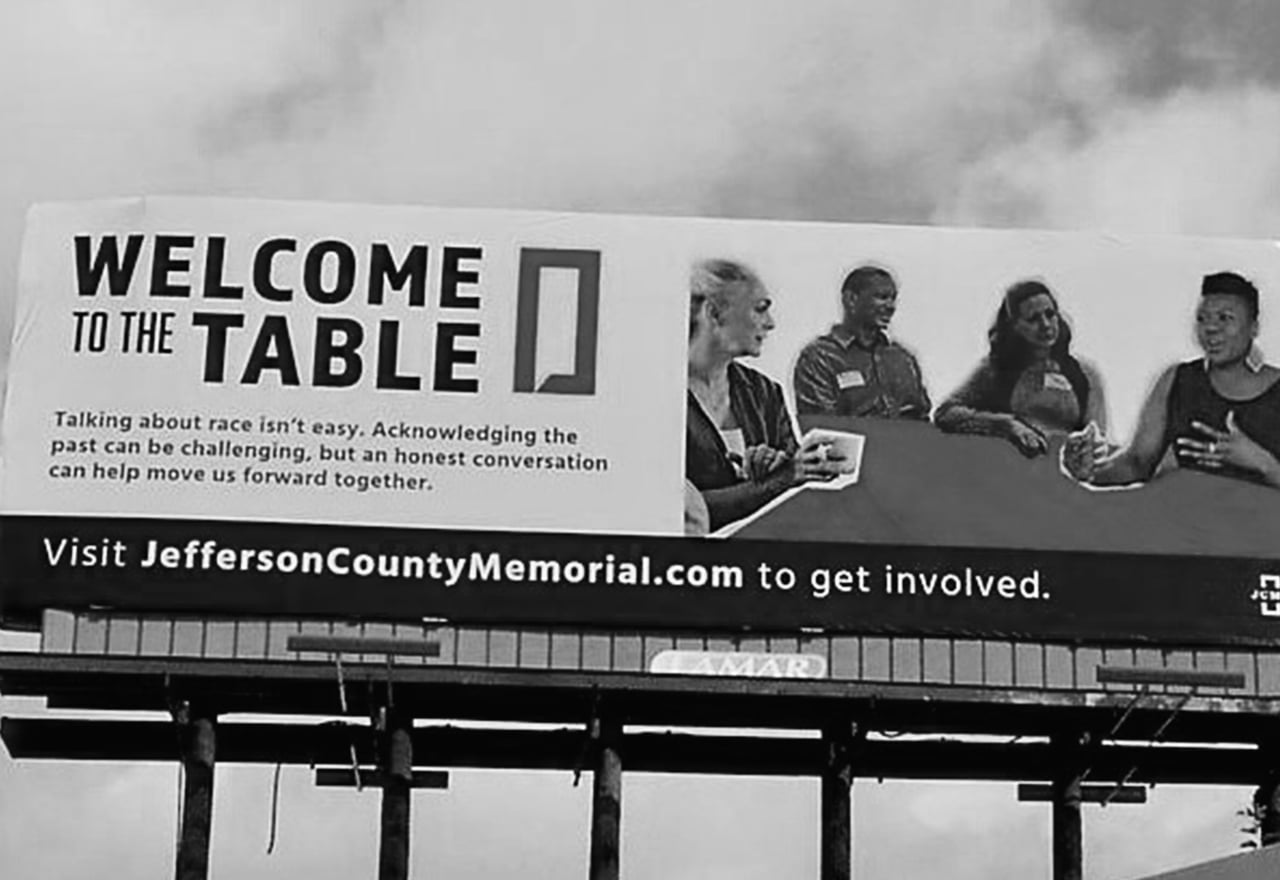
To support dialogue, the Jefferson County Memorial Project, with strategic communication support from Kids in Birmingham 1963 and FHI 360, implemented the Voices of Truth Campaign, using billboards, murals, and social media to encourage people in the Birmingham area to talk more about our shared racial history and how it plays out today.

One of her favorite activities of that campaign involved creating a deck of playing cards that act as conversation starters, encouraging players to talk about race, their shared racial history, and reconciliation. “All of us—KIDS, JCMP, and FHI 360—gathered groups to talk about what topics should be on the cards, and then FHI 360 had a designer turn them into cards,” she says.

The Alabama History Coalition

A third KIDS initiative, launched in 2021, is the Alabama History Coalition, which seeks to encourage Birmingham-area schools to prioritize teaching Alabama’s civil rights history.

“We formed a team and decided in our first meeting that we really wanted to focus on how to get civil rights history taught in area schools,” she says.

Jimerson says the KIDS Education Team members queried stakeholders, including school principals, curriculum specialists, teachers, parents, students, nonprofit workers and university professors about how civil rights history was being taught in local schools and what improvements were needed.

“Each interview ended with, ‘Who else should we be talking with?’ So, we kept finding people who wanted to make this happen,” she says. “We got the idea that if we formed a coalition and brought people together, we could strengthen this work and make things happen faster,” Jimerson says.

Journalists have featured KIDS storytellers in outlets such as The Washington Post podcast, NBC Nightly News, NPR, German Public Radio, and al.com.

So Kids in Birmingham 1963 invited other organizations, such as the Bending the Arc Project, to become coalition co-sponsors. Several co-sponsors generate materials and create opportunities—such as museum tours and field trips—for teachers and students to learn civil rights history.

Jimerson recalls a fourth-grade class at Shades Cahaba Elementary School in Homewood that used KIDS’ stories and other primary sources to learn about Birmingham civil rights activist the Rev. Fred Shuttlesworth.

Representing the Alabama History Coalition, Dr. Nefertari Yancie spoke in Montgomery in support of new state standards for teaching social studies, adopted in 2024. The Coalition co-sponsors’ recommendations resulted in greater attention to diverse points of view and a broader look at the state’s long history of civil rights.

“They were excited that this was someone local,  and they felt very proud to be learning about Fred Shuttlesworth and why the airport is named after him,” she says.

Jimerson is eager for KIDS to reach students and teachers in more schools, so KIDS applied for and won a Teaching with Primary Sources grant from the Library of Congress in 2025. Those funds allow KIDS to hire two teachers to act as School Liaisons and visit K-12 educators to get their opinions regarding teaching civil rights history and the accessibility of professional development.

The grant also allows the Bending the Arc Project to create video materials that combine oral history clips with the Library’s primary sources; and Sandpiper Advisory Group to conduct oral history interviews and offer professional development workshops for local teachers.

It’s really gratifying to have students today pay attention to the messages from our generation, in part because I think it brings home for them the difference that young people can make.

The “Housing is Everything” Project

The fourth initiative, “Housing Is Everything,” began when KIDS started to collect oral histories of storytellers whose families experienced the impact of the construction of the highway system in their communities. This led the group to begin learning how the building of the nation’s highway system divided Black neighborhoods and forced many Black families to move away from their homes and communities.

Jimerson says the Housing Is Everything initiative has inspired some school projects.

For example, a local chemistry teacher partnering with KIDS took her McAdory High School students to a Black neighborhood in North Birmingham to measure pollutants; the project helped the students better understand the impacts of redlining and housing discrimination on people and health during the civil rights era and the lasting impacts today.

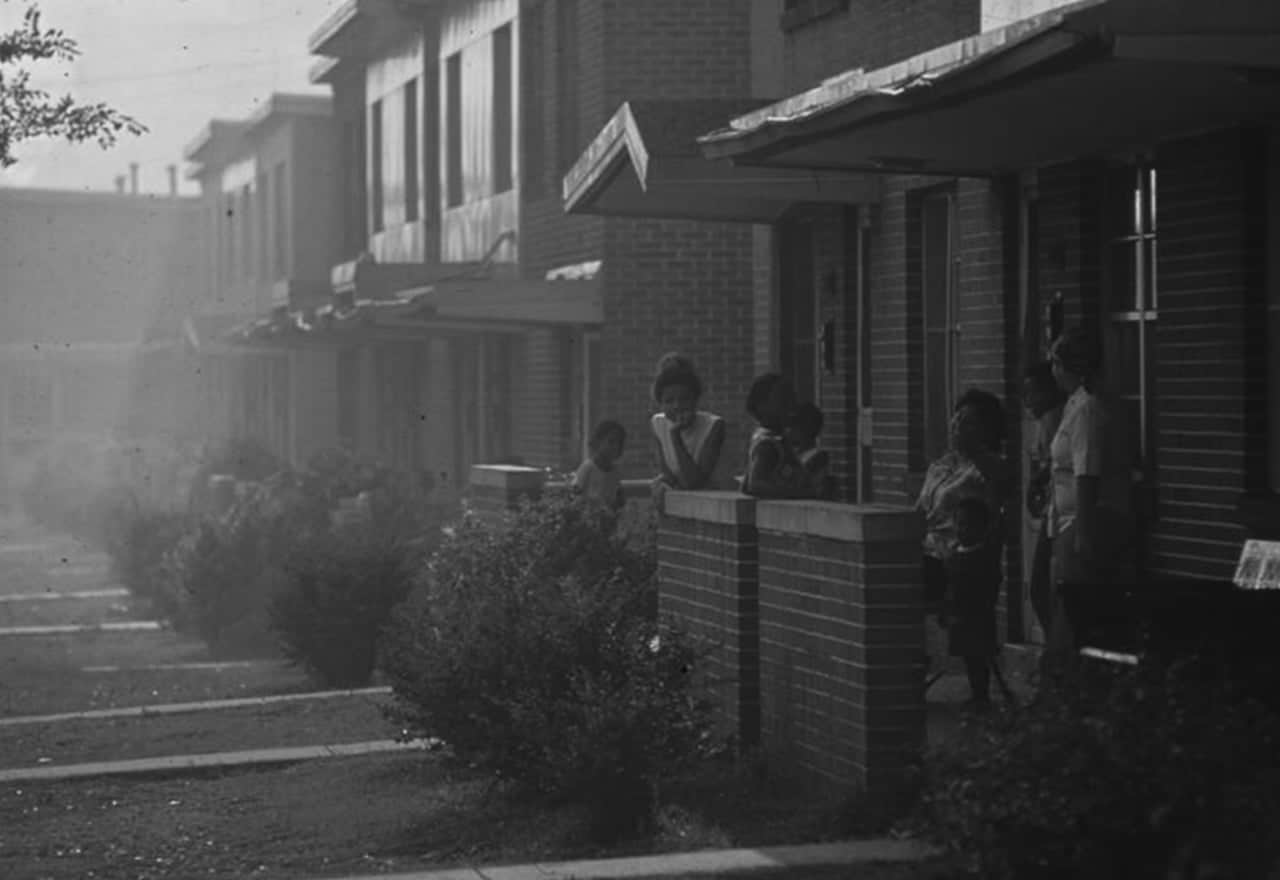
Day becomes night in North Birmingham, adjacent to U.S. Pipe plant and the most heavily polluted part of the city, July 1972. Photo by LeRoy Woodson/NARA.

Kids in Birmingham 1963 is also teaming with the National Parks Conservation Association to construct digital story maps that can show, for example, where pockets of poverty and pollution and other ills exist in underserved sections of the city—the legacies of Birmingham’s historically segregated neighborhoods.

“What gives me hope is the enthusiasm that we see as we talk with people about making this history a priority topic in local schools,” Jimerson says. “We’re finding that there are a lot of people in Alabama who want to see schools teach the full story of civil rights.”

We decided in our first meeting that we really wanted to focus on how to get more civil rights history taught in area schools.

A Family History of Social Justice Work

Jimerson says her desire to do this work stems partly from knowing that her own father, Rev. Norman “Jim” Jimerson, played a part in the civil rights movement.

The elder Jimerson moved the family to Birmingham in 1961 to become executive director of the Alabama Council on Human Relations and to open lines of communication between Black civil rights leaders and activists and leaders in the white communities.

Jimerson says her father had grown up during the Great Depression, and his mother was widowed at a young age. Poverty and hard times followed. “I don’t know if he had some kind of awakening along the way. It wasn’t like his family was particularly progressive. But he just always wanted to serve people.”

The students “felt very proud to be learning about Fred Shuttlesworth and why the airport is named after him.

It took six months for Rev. Jimerson to convince his wife to move to Birmingham, Ann Jimerson says.

“From the time Dad first started bringing home news about what was going on in the Deep South, we thought of it, at least in my mind, as akin to being a missionary and we were going into dangerous territory,” she says.

“He gave me credit with being the one who said, ‘If it’s that bad, we have to go.’”

Moving to Alabama was an adjustment for the family, Jimerson says. They settled in a home in Homewood, a suburb of Birmingham. By then she, the second oldest of four children, was starting fifth grade.

“Even though we had moved from Massachusetts to Virginia and thought that we were already in the South, there was something deeper South about going to Homewood.

Fifty years after the bombing of Sixteenth Street Baptist Church, the Jimerson family donated a segment of the stained glass that had blown from the church windows that day to the Smithsonian’s National Museum of African American History and Culture. Photo by Mark Jimerson.

But the family faced severe pushback from whites who resented Jimerson’s efforts to facilitate dialogue between the races. The threatening phone calls came frequently.

“People had our telephone number, so they would just call up and sometimes they would just breathe into the phone. Sometimes it was a man speaking, but they never identified themselves, saying things like, ‘We know that your dad has a Black’ – only they wouldn’t use the word Black – ‘secretary and we can’t have that.’” Jimerson says.

From the time Dad first started bringing home news about what was going on in the Deep South, we thought of it, at least in my mind, as akin to being a missionary and we were going into dangerous territory.

Her younger brother, Paul, was especially sad after learning that even his Cub Scout den mother made one of the threatening calls, she says.

In addition to the anonymous threats, the Jimersons were told by leaders of the Vestavia Hills Baptist Church that people would be happier if the family stopped attending services there.

“It was clear that we were treading on sensitive ground,” Jimerson says.

Soon, the couple instructed their children to not talk about what Rev. Jimerson did for a living. “It was easy enough to do because we could just say he was a pastor and let it go at that,” she says. “So we were pretty cautious.”

For the Kids in Birmingham 1963 website, Jimerson tells the story of her family’s reaction to the bombing of the Sixteenth Street Baptist Church.

The family faced severe pushback from whites who resented Jimerson’s efforts to facilitate dialogue between the races. The threatening phone calls came frequently.

Following the bombing, Rev. Jimerson brought home pieces of the stained glass that shattered in the blast. Shortly thereafter, when her seventh-grade art teacher, Miss Lemon, announced an upcoming art lesson using glass to make mosaics, Jimerson got an idea. “Suddenly I imagined an art piece I would create to honor the girls who were killed in the bombing,” she writes. “I needed that glass.” So she begged her mother for a few pieces of the stained glass from the church, promising that the glass would retain its color and shape, and her mother allowed her to select a few shards.

Jimerson describes her anxiety at the thought of telling her art teacher where the glass came from—an act of hatred perpetrated on girls her own age who happened to be Black. “No one at our all-white junior high school had talked with us about the bombing,” she writes. “No one, kids or teachers, had expressed the outrage we were allowed to acknowledge at home.”

Following the bombing, Rev. Jimerson brought home pieces of the stained glass that shattered in the blast.

Concerned that Miss Lemon might dismiss her idea, she approached the art teacher cautiously. “As I carefully opened the cigar box, my eyes stung with tears and my voice caught and I stumbled over words as I tried to tell her how I had come by the holy glass,” she writes. “She grasped my meaning and fell respectfully silent. I knew she felt the power of these shards too. Maybe it hadn’t been safe for her, either, to be outraged, but we shared that private moment of compassion and shame. I thank her still for allowing me to tell the whole truth.”

Explore More
Kimberly McNair
Lisa McNair
Sarah Collins Randolph
1963
Four Spirits
The 5th Little Girl
l
Portrait: Charles (Chuck) Morgan, Jr.
w
Kids in Birmingham 1963